Mariia Zerova
She studied a wide range of fungi—from parasitic to edible species. She discovered and described many species new to science and took part in research on the artificial cultivation of certain edible mushrooms.
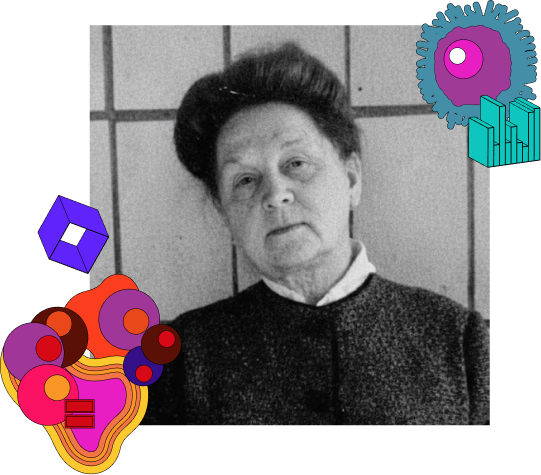
Mariia Zerova (1902–1994) was a mycologist and Doctor of Biological Sciences who fundamentally reshaped how fungi were understood in Ukraine. Thanks to her research, the list of edible mushrooms expanded from just a few dozen to nearly one hundred species.
She studied a wide range of fungi—from parasitic species to edible and medicinal ones. Zerova discovered and described dozens of species previously unknown to science, four of which were later named in her honor. In the course of her mycological work, she examined around 160 plant species and identified more than 400 species of fungi, many of which she described for the first time. Among her discoveries were the steppe morel (Morchella steppicola), found in the Ukrainian steppes, and Tricholomella constricta—an edible mushroom that grows on coniferous trees.
Mariia Zerova also took part in research on the artificial cultivation of edible mushrooms, which made it possible to use fungal resources much more broadly in Ukraine. While previously only 12 edible mushroom species were considered safe, she proposed a list of nearly 100.
In addition, Zerova was the first scientist in Ukraine to begin systematic research on medicinal mushrooms, laying the groundwork for future studies in this field. She combined fundamental science with practical application—and it is this approach that made her contribution important not only for science but for everyday life as well.
Content was produced by the INSCIENCE organization as part of the “WOMEN IN SCIENCE” project in the framework of the “EU 4 Gender Equality: Together against gender stereotypes and gender-based violence” programme (phase 2), funded by the European Union, implemented jointly by UN Women and UNFPA.
Content was conducted with the financial support of the European Union. Its content is the sole responsibility of the INSCIENCE organization and do not necessarily reflect the views of the European Union.
 Previous story