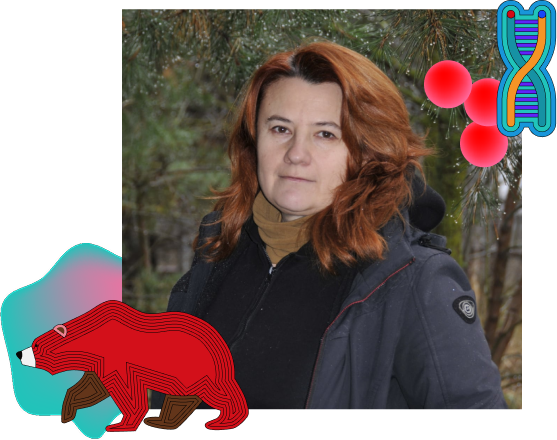
Marina Shkvyrya
For many years, she has studied Ukraine’s large predators—bears, wolves, and lynx. She is a co-founder of the «White Rock Bear Shelter», which rescues predators from improper and abusive captivity.
How do changes in the environment (forests, climate, human activity) affect the behavior of Ukraine’s large predators?
Ukraine faces a very high level of habitat destruction and weak enforcement of environmental protection laws. As a result, bears, wolves, and lynx suffer from human-driven ecosystem changes, poaching, demand for keeping wild animals in captivity, and the lack of state monitoring and effective conservation programs. The war is an additional challenge—both through its direct impacts and indirect ones, such as the fragmentation of ecological corridors and the difficult economic situation, which further limits conservation efforts.
Why did bears and other large predators capture your attention as research subjects?
These are so-called charismatic species, and highlighting the challenges of their conservation makes it easier to communicate to the public why protecting natural ecosystems as a whole is essential. My diploma thesis and PhD dissertation focused on wolf ecology, so continuing to work with this group of species was a natural path for me.
You co-founded the «White Rock Bear Shelter» to rescue predators from improper conditions. How did the idea come about, and what goals do you set for yourselves?
My husband and colleague and I worked extensively on projects studying predators in the wild and realized that one of the key threats to their conservation is illegal and incompetent keeping of animals in captivity. That’s why we established a foundation and a sanctuary—to improve the system of wild animal rehabilitation in Ukraine and to engage in public education. Our goal is not only to rescue individual animals but also to change attitudes toward them and contribute to the long-term conservation of species in the wild.
Can you recall the funniest or most unexpected situations you’ve encountered during fieldwork?
At one field station in a steppe nature reserve, I couldn’t find any wolf tracks for several days and decided to take a day off. In the morning, I stepped out of the forester’s house with a cup of coffee to relax—and saw a wolf pack calmly going about its business a few hundred meters away. Their regular route passed right nearby—as did their den, as I later discovered.
What do you enjoy most about working as a zoologist today?
At this stage, I value practical feedback the most—legislative changes shaped with our expert input, the synergy between solid scientific evidence and activism, and the rescued animals that now live full, natural lives.
 Previous story